Methodology for Determining the Needs for the Development and Expansion of Publicly Accessible Charging Infrastructure for Electric Vehicles by 2030
As part of the study, a methodology was prepared and developed to identify the needs of the transport sector and the expansion of the publicly accessible charging infrastructure for electric vehicles.
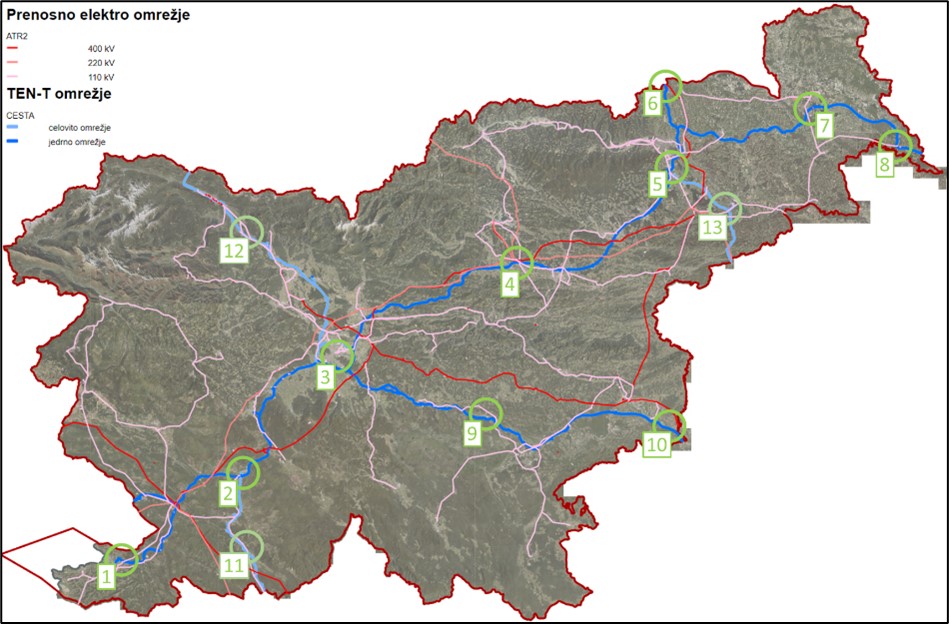
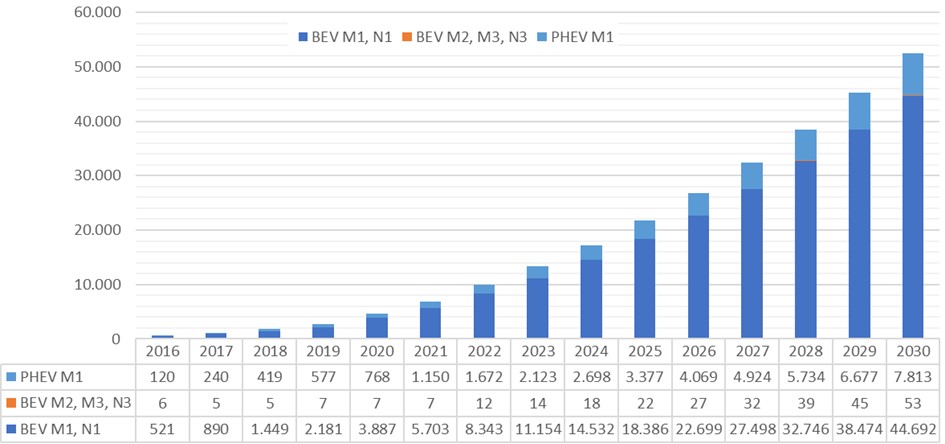
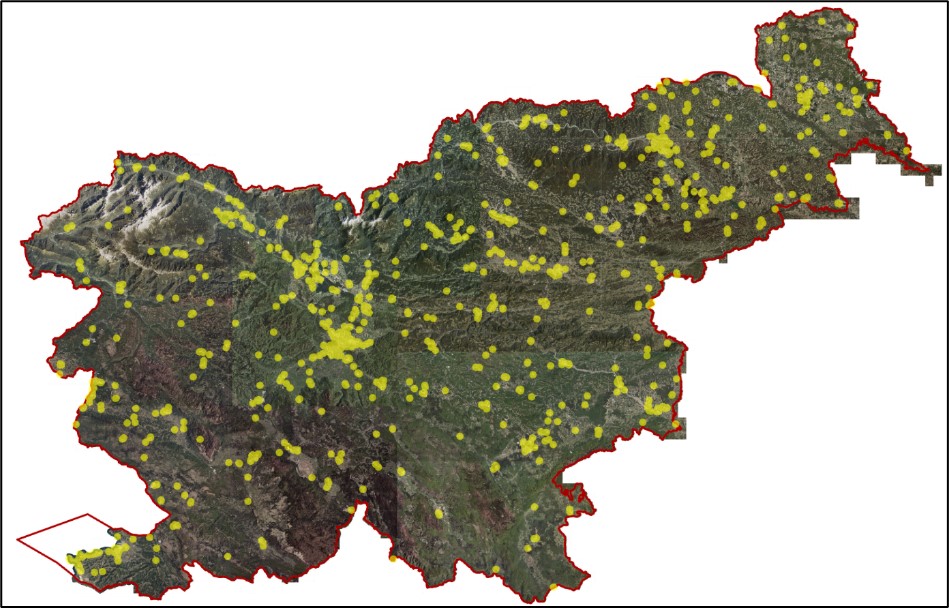
The following parameters were explained and considered: settlement pattern or population density, traffic flows or average daily traffic (ADT), area accessibility (immediate proximity to categorized roads), number of registered electric vehicles, projected electric vehicle fleet growth, accessibility of the electricity grid (locations and distance from transformers), points of interest (POI) such as attractions, bus stations, castles, healthcare facilities, libraries, museums, nature reserves, parks, recreational areas, sports centers, stadiums, swimming pools, taxi stands, Slovenian Railways stations, theaters, and faculties/universities.
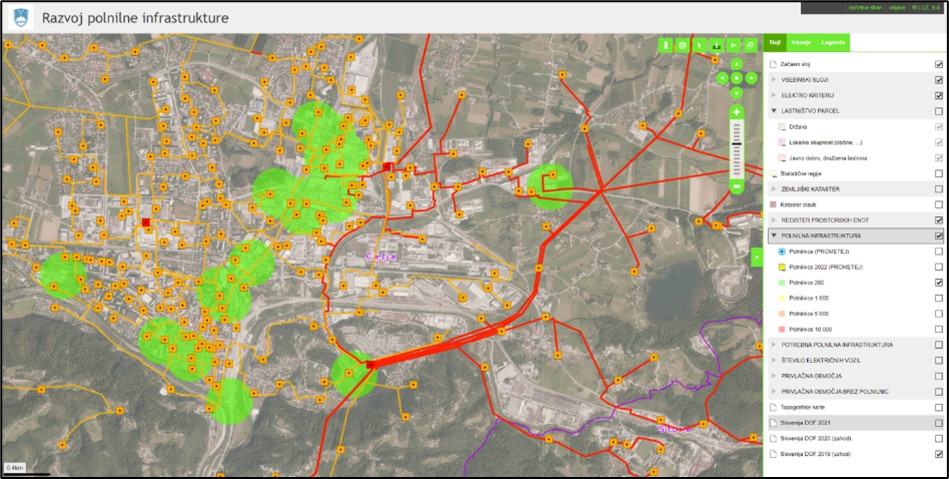
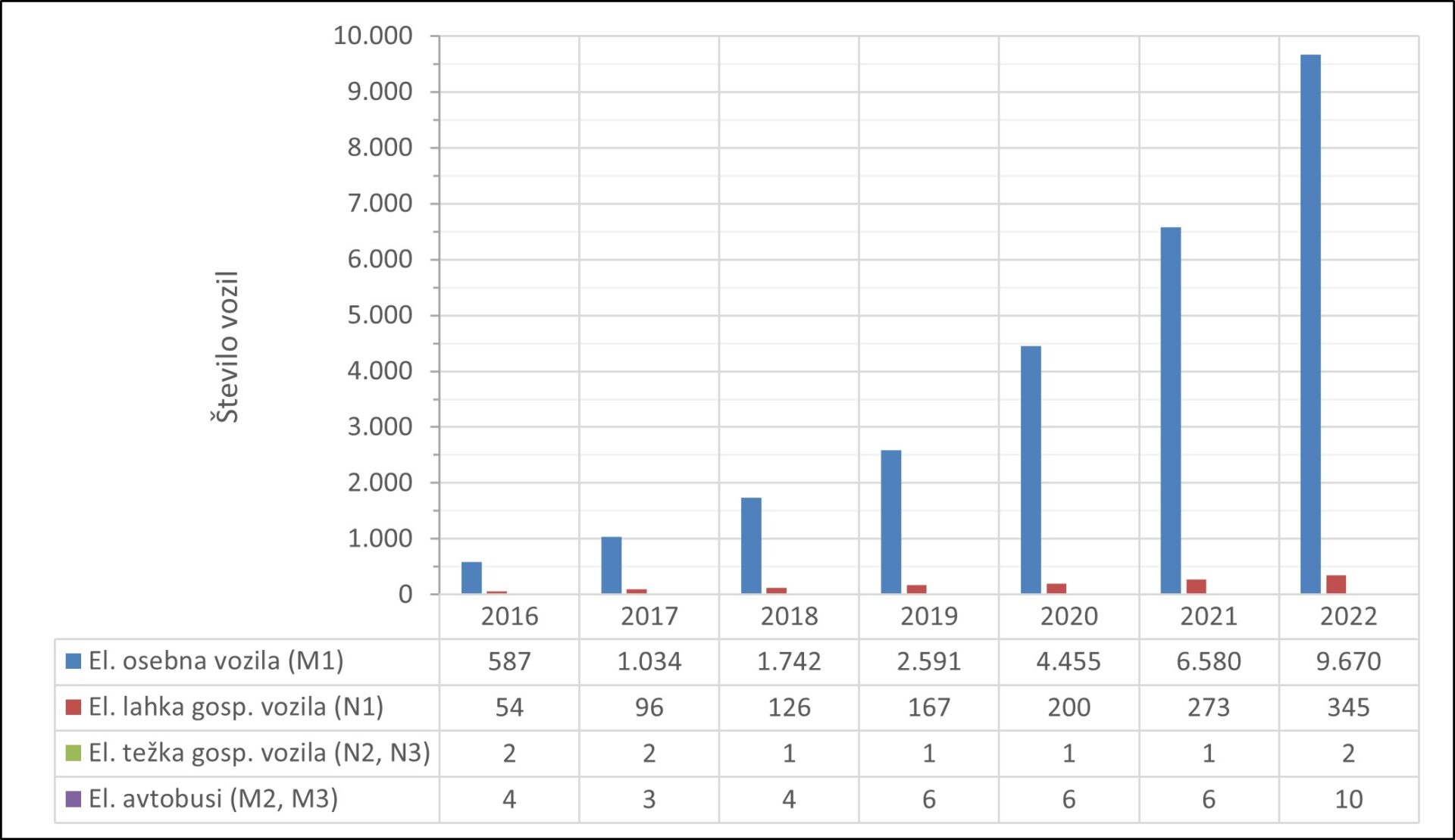
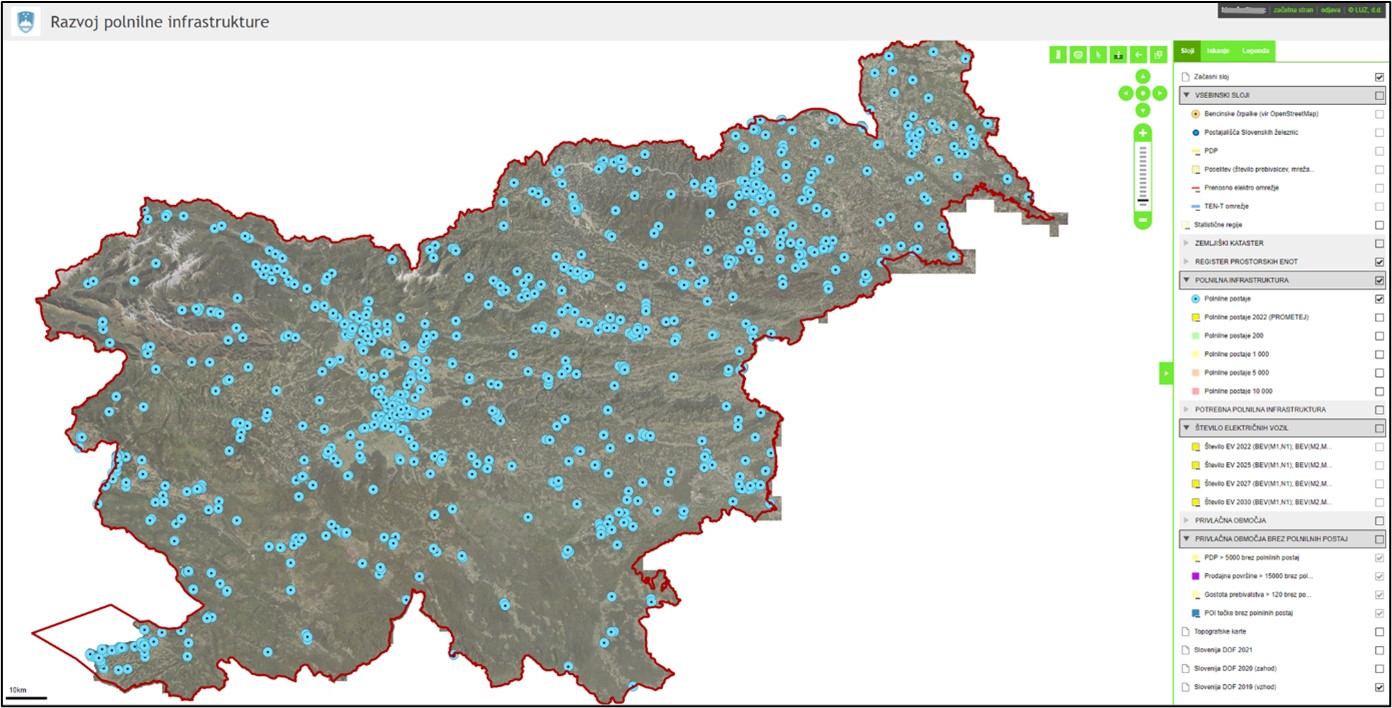
For the purpose of carrying out the task and developing the methodology, a GIS web tool was established. This tool allows for the review of individual layers selected for the project based on the criteria mentioned above. The tool enables both spatial and infrastructural analysis of the existing situation, as well as analysis of locations and potential upgrades of the charging infrastructure. In the analysis of the existing public charging infrastructure for EVs, a review of the situation by individual municipalities was conducted. By comparing the number of vehicles and the number of charging stations, it was determined whether the charging infrastructure is currently sufficient. Based on the previous number of electric vehicles in municipalities, the projected growth in the number of EVs until 2030 was determined, and it was also ascertained whether the condition of 10 EVs/charging point would be met. If the condition is not met, the number of additional charging points or charging stations needed was identified. The analysis was performed not only for the existing situation (2022) but also for the years 2025, 2027, and 2030.